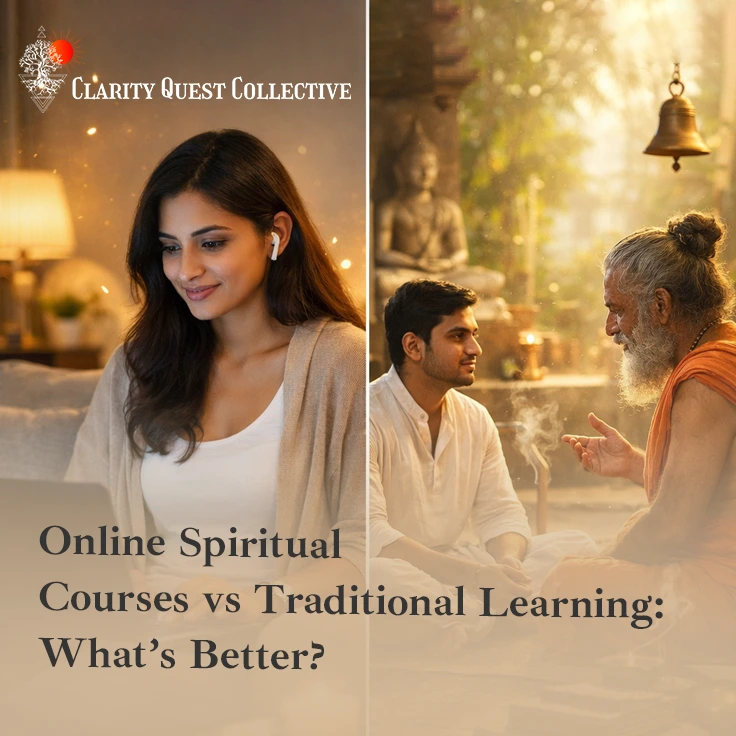
In recent years, more people have started looking for deeper meaning in their lives. Whether you are seeking peace of mind or a connection to something greater, the interest in spiritual education is at an all-time high. Because our world is so connected, we now have two main ways to explore these ancient truths. You can choose modern digital platforms or stick with time-tested in-person methods. This brings us to a very important question: when comparing Online Spiritual Courses vs Traditional Learning, which one is actually better for your unique path? In this guide, we will explore both options to help you find the right fit for your heart and lifestyle.
What Are Online Spiritual Courses?
Online spiritual learning is a modern way to access sacred wisdom using digital technology. These programs allow you to study topics like energy healing, soul purpose, and spiritual coaching from your own home. You can find everything from comprehensive meditation and mindfulness courses to specialized classes on breathwork or yoga philosophy.
The most significant advantage of online spiritual courses is how they fit into a busy life. Most of these programs are self-paced, meaning you can watch a video or listen to a guided session whenever you have a free moment. This level of accessibility means that digital spirituality is no longer restricted by where you live. You can connect with a world-class teacher while sitting in your favorite chair, making it easier than ever to learn spirituality online.
What Is Traditional Spiritual Learning?
Traditional spiritual learning refers to the classic way of receiving wisdom through direct, in-person contact. This often involves traveling to ashrams, visiting local temples, or attending in-person spiritual retreats. In these settings, you learn through the physical presence of a teacher or a mentor.
There is a deep emphasis on community, often called a Sangha, in these environments. When you sit with others who share your intentions, the collective energy can be very powerful. Traditional learning often requires a bigger commitment of time and physical effort. However, many seekers feel that the direct guidance and the lack of digital distractions help them stay more grounded during their journey toward spiritual growth.
Key Differences Between Online Spiritual Courses and Traditional Learning
Choosing the right path requires understanding how these two methods differ in practice. Here is a breakdown of the main factors you should consider:
- Accessibility: Online courses are available to anyone with an internet connection. Traditional learning often requires you to live near a center or travel long distances to find a specific teacher.
- Flexibility: Online programs let you set your own schedule. Traditional settings usually follow a strict daily routine that you must follow.
- Cost: Generally, digital courses are more affordable because they do not involve travel or lodging fees. In-person retreats can be quite an investment.
- Personal Interaction: In-person learning offers immediate, face-to-face feedback. Online interaction usually happens through video calls or community forums.
- Environment: Traditional learning takes place in a dedicated sacred space. Online learning requires you to create your own quiet space at home, which can sometimes be a challenge.
The primary goal of Online Spiritual Courses vs Traditional Learning is the same: to help you find inner peace. However, the experience of getting there is very different for each person.
Benefits of Online Spiritual Courses
One of the best benefits of online learning is the sheer variety of perspectives available. You are not limited to the spiritual teachers in your local neighborhood. Instead, you can explore diverse traditions from across the globe with just a few clicks. This variety allows you to build a personalized practice that truly resonates with you.
Modern spiritual education also uses technology to support your habits. Many online courses come with mobile apps that send you daily reminders to meditate or journal. These tools help you stay consistent even when life gets chaotic. For many people, the ability to learn at their own speed is the key to lasting change. You can pause a lesson to reflect or re-watch a complex section until it truly sinks in.
Benefits of Traditional Spiritual Learning
There is something irreplaceable about the immersive nature of traditional settings. When you attend an in-person retreat, you are stepping away from the noise of your daily life. This physical separation creates a “container” for deep transformation. Without the temptation of phones or work emails, your mind can settle into a much deeper state of silence.
Direct mentorship is another huge plus. A teacher in the room can see your posture, hear the tone of your voice, and offer real-time corrections. This level of personal attention ensures that you are practicing techniques safely and effectively. Additionally, the friendships you form in a physical community often lead to lifelong support systems. Having a group of friends to walk alongside you makes the spiritual path feel much less lonely.
Which Option Is Better for You?
The answer depends on your personality, your goals, and your current lifestyle. If you have a demanding job or young children, the flexibility of online spiritual courses might be exactly what you need. It allows you to grow without adding more stress to your schedule.
If you feel stuck in your practice and need a major “reset,” a traditional in-person experience might be the better choice. Sometimes we need a change of scenery to see things clearly. Many successful seekers actually use a hybrid approach. They take online courses for their daily study and attend one or two in-person retreats each year to deepen their experience. This balance offers the best of both worlds.
Role of AI in Spiritual Learning
As we embrace the digital age, artificial intelligence is becoming a helpful tool for spiritual seekers. AI platforms like Gemini and ChatGPT can act as study assistants. They can provide instant explanations of complex texts or suggest creative journaling prompts based on your current feelings. While an AI cannot replace a human soul or a spiritual master, it can certainly help you organize your thoughts and find information quickly. These tools make the intellectual side of spirituality more accessible to everyone, everywhere.
Conclusion
Whether you choose Online Spiritual Courses vs Traditional Learning, the most important thing is that you start your journey. Online courses offer unmatched convenience and a global library of wisdom, while traditional learning provides the depth of human connection and sacred silence. Neither is “better” in a general sense; there is only what is better for you right now. Trust your intuition, be patient with yourself, and remember that every step you take toward self-discovery is a step in the right direction.
FAQs Section
Are online spiritual courses effective?
Yes, online courses are very effective if you stay disciplined. They provide the same core wisdom as in-person classes but allow you to integrate that wisdom directly into your home environment. Many people find that practicing at home makes their spiritual habits more sustainable in the long run.
What are the benefits of traditional spiritual learning?
The main benefits are a distraction-free environment and direct mentorship. Being physically present with a teacher allows for a transmission of energy and nuance that is sometimes lost on screen. It also provides a strong sense of community and shared purpose with fellow students.
Can I achieve spiritual growth through online courses?
Absolutely. Spiritual growth is an internal process that happens within your own heart and mind. As long as the teachings are authentic and you apply them with sincerity, you can experience profound shifts in your awareness and well-being through digital platforms.
How do I choose the right spiritual course?
Start by identifying what you need most, such as stress relief or philosophical knowledge. Research the teacher’s background and read student reviews. Most importantly, see if their teaching style feels warm and trustworthy to you. Your intuition is often your best guide.
Is a combination of online and traditional learning ideal?
For many people, a hybrid approach is the most balanced way to learn. You can use online courses for daily consistency and use traditional retreats for deeper, focused work. This allows you to maintain your growth throughout the year while still enjoying immersive experiences.